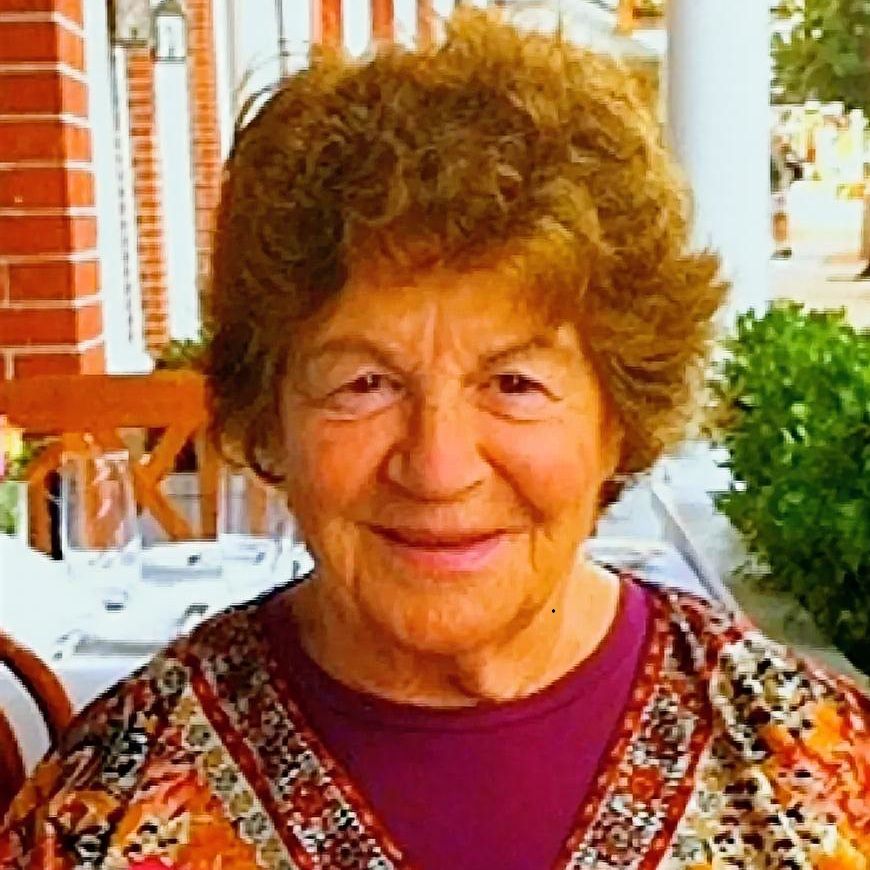
Judith Hershcopf Banki was an internationally renowned writer, lecturer and expert in interreligious affairs. Her writings and research reports largely focused on the image of the “other” in religious education and the sources of prejudice in various teaching and preaching traditions. She has served as the Associate National Director of Interreligious Affairs for The American Jewish Committee and as editor of the Interreligious Newsletter. In 2001, she received an honorary doctorate from Seton Hall University in recognition of her pioneering work in the area of Jewish-Christian Relations. Ms. Banki authored The Image of the Jews in Catholic Teaching, a memorandum which helped pave the way for the historic declaration, Nostra Aetate, adopted at the Second Vatican Council. She condensed and interpreted major religious textbook self-studies carried out at Yale Divinity School, St. Louis University and Dropsie College in the United States, and in Europe at the Pro Deo University in Rome, Louvain University in Belgium and the universities of Duisberg and Freiburg in Germany. An early proponent of women’s interreligious dialogue, she was a founding member of the Women of Faith Task Force, a dialogue involving Jewish, Christian and Muslim women. She was the only woman to give a paper at the Vatican-Jewish conference in Baltimore, 1993.
Her writings have appeared in a variety of publications, including Commonweal, Religious Education, the National Catholic Register, and the Journal of Ecumenical Studies. For two consecutive years, her coverage of the Second Vatican Council was featured as “The Year in Religion” articles of the American Jewish Year Book (1965-66). Her article “Baltimore and Eisenach: Reflections on Two Dialogues” was awarded The Graymoor Ecumenical Prize for 1993.
Judith Banki has been repeatedly honoured for her longstanding commitment to interfaith dialogue, including an honorary doctorate from Seton Hall University in 2001, the Interfaith Gold Medallion from the International Council of Christians and Jews [ICCJ], the Nostra Aetate Award from the National Catholic Center on Holocaust Education at Seton Hill University, and the 2009 Shevet Achim Award from the Council of Centers on Jewish-Christian Relations [CCJR]. In 1992, the National Workshop of Christian-Jewish Relations, in recognizing her contributions, said: “No one has done more to shape the nature and meaning of interreligious relations as we have developed them, perhaps uniquely, in this country than Judith Banki." One of the pioneers of organized interreligious dialogue, she was honored by the National Workshop on Christian-Jewish Relations in 1992.
"Nostra Aetate: Reflections of an Eyewitness." Address at the Annual Conference of the International Council of Christians and Jews, Rome, June 29, 2015. [text]
"The Image of the Jews in Catholic Teaching." June 22, 1961. Report from the American Jewish Committee to Cardinal Augustin Bea, in preparation for the Second Vatican Council. [text]
"The Church and the Jews: The Struggle at Vatican Council II." American Jewish Year Book (1965). [text]
"The Church and the Jews: The Struggle at Vatican Council II." American Jewish Year Book (1966). [text]
Video Interview: "Judy Banki Tells How She Entered the Field of Jewish-Christian Relations." May 22, 2020. Courtesy of Dr. Malka Simkovich. [video] [Some people she mentions: Cardinal Augustin Bea, who directed the Vatican Secretariat for Promoting Christian Unity, was instructed in 1960 by Pope John XXIII to draft a statement on Catholic-Jewish relations. Rabbi Dr. Abraham Joshua Heschel, professor at the Jewish Theological Seminary, was a foremost American rabbi at the time of the Second Vatican Council. Rabbi Marc Tanenbaum was Director of Interreligious Affairs for the American Jewish Committee (AJC). Sr. Dr. Rose Thering conducted groundbeaking educational research on Catholic textbooks in the 1950s.